
Arthritis
Arthritis is a condition that affects the joints, leading to pain, stiffness, and swelling. While it can impact any joint in the body, arthritis in the lower limbs can be particularly debilitating, affecting one's ability to walk and carry out daily activities. At Health First Foot and Gait Clinic, our podiatrists specialise in diagnosing and treating arthritis in the feet, helping patients manage their symptoms and maintain their quality of life.
What is Lower Limb Arthritis?
Arthritis is a term for inflammation of the joints. The two most common types that affect the lower limbs are osteoarthritis and rheumatoid arthritis.
Osteoarthritis (OA): Often referred to as “wear and tear” (but more recently being referred to as “wear and repair”), osteoarthritis occurs when the cartilage that cushions the ends of your bones gradually wears away. This leads to the bones rubbing against each other and/or the development of extra bone around the joint (known as osteophytes), causing pain, swelling, and reduced joint movement. Osteoarthritis frequently affects the hips, knees, ankles, mid-foot, and toe joints..
Rheumatoid Arthritis (RA): Rheumatoid arthritis is an autoimmune disorder in which the immune system mistakenly attacks the joints, leading to inflammation. This condition can cause significant pain and swelling, particularly in the small joints of the feet and toes, eventually leading to joint deformity if left untreated.
The information below relates more to osteoarthritis, but some of the information is applicable to rheumatoid arthritis.
Symptoms of Lower Limb Arthritis
The symptoms of arthritis in the lower limbs can vary depending on the severity and the specific joints affected. Common symptoms include:
Pain: Persistent joint pain is often the most noticeable symptom of arthritis. This pain may worsen with activity and improve with rest.
Joint Deformity: In more severe cases, the affected joints may become misshapen due to chronic inflammation and damage to the cartilage and bone.
Reduced Range of Motion: Arthritis can limit the movement of the affected joints, making everyday tasks such as walking or climbing stairs difficult.
Swelling: Inflammation can cause the affected joints to swell, making them appear larger and feel tender to the touch.
Stiffness: Joints affected by arthritis can feel stiff, especially in the morning or after periods of inactivity.
Treatment Options for Lower Limb Arthritis
Although there is no cure for arthritis, various treatment options are available to help manage your symptoms and improve your quality of life. At Health First Foot and Gait Clinic, we tailor treatment plans to your individual needs, which may include a combination of conservative therapies, lifestyle modifications, and, in some cases, surgical interventions.
Conservative Therapies
Physical Therapy: A personalised exercise programme can help strengthen the muscles around the affected joints, improve flexibility, and reduce pain. Our podiatrists may recommend specific exercises to target the lower limbs, including stretching, strengthening, and low-impact aerobic exercises.
Orthotic Devices: Custom orthotic insoles or braces can help redistribute pressure across the joints, reducing pain and improving mobility. These devices are particularly useful for managing arthritis in the feet, ankles, and knees.
Medications: Nonsteroidal anti-inflammatory drugs (NSAIDs) can help reduce pain and inflammation. In some cases, our podiatrists may recommend corticosteroid or hyaluronic acid injections directly into the affected joint for more immediate relief.
Footwear Modifications: Wearing supportive shoes with cushioned soles can help reduce the impact on your joints when walking. We can recommend footwear that provides the right level of support and comfort for your specific condition.
Laser Therapy: This promotes healing so your joints can recover from damage caused by arthritis. It is much closer to being a cure than other conservative medical approaches, but it is not a panacea. However one significant advantage is that it is non-invasive.
Lifestyle Modifications
Weight Management: Maintaining a healthy weight is crucial for reducing the strain on the joints in your lower limbs. Following guidance on nutrition and exercise can help you achieve and maintain a healthy weight.
Activity Modification: Avoiding high-impact activities that exacerbate joint pain, such as running or jumping, can help protect your joints. Instead, consider low-impact activities like swimming or cycling to stay active without putting undue stress on your joints.
Surgical Interventions
In cases where conservative treatments are not effective, surgical intervention may be necessary to relieve pain and restore function. Surgical options include:
Joint Replacement Surgery: In severe cases of arthritis, particularly in the hips or knees, joint replacement surgery may be recommended. This procedure involves removing the damaged joint surfaces and replacing them with artificial implants.
Arthroscopy: This minimally invasive procedure involves inserting a small camera with cutting tools into the joint to clean out any debris, smooth rough surfaces, and repair damaged tissue.
Fusion Surgery: Fusion surgery may be recommended for arthritis in the smaller joints of the feet or ankles. This procedure involves permanently joining the bones in the affected joint to reduce pain and improve stability.
Managing Arthritis at Home
In addition to professional treatment, there are several steps you can take at home to manage arthritis symptoms and maintain joint health:
Hot and Cold Therapy: Applying heat or cold to the affected joints can help reduce pain and inflammation. Heat therapy is particularly effective for relieving stiffness, while cold therapy can help reduce swelling.
Regular Exercise: Staying active is essential for maintaining joint flexibility and muscle strength. To keep your joints moving, engage in low-impact exercises such as walking, swimming, or yoga.
Healthy Diet: A balanced diet rich in anti-inflammatory foods, such as fruits, vegetables, and omega-3 fatty acids, can help reduce inflammation and support overall joint health.
Causes and Risk Factors
The exact cause of arthritis is not always known, but several factors can increase your risk of developing the condition, particularly in the lower limbs:
Age: As we age, the risk of developing arthritis increases, with joints experiencing wear and tear over time.
Genetics: If there’s a family history of arthritis, your chances of developing the condition may be higher, particularly with rheumatoid arthritis.
Previous Injury: Injuries such as fractures or dislocations can lead to arthritis later in life.
Obesity: Carrying excess weight places additional stress on the weight-bearing joints in your lower limbs, increasing the risk of osteoarthritis.
Repetitive Strain: Jobs or activities that require repetitive motions or heavy lifting can contribute to the development of arthritis in the lower limbs.
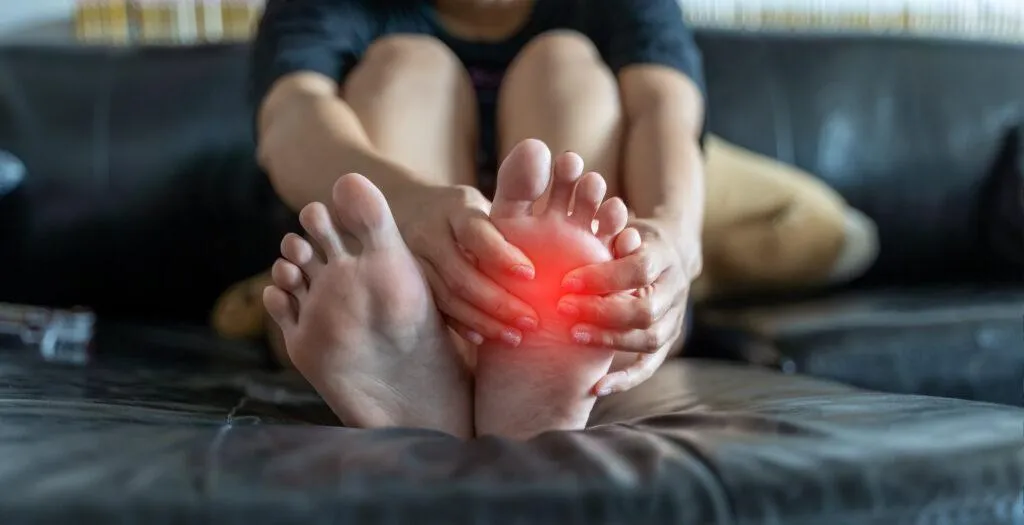
Diagnosing Lower Limb Arthritis
A thorough assessment by our podiatrists is essential to accurately diagnose arthritis in the feet & ankles. During your consultation, we will review your medical history, conduct a physical examination, and may recommend imaging tests such as X-rays or MRIs to assess the extent of joint damage.
Physical Examination: Our podiatrists will assess the affected joints for signs of swelling, tenderness, and reduced range of motion. We will also evaluate your gait and posture to identify any compensatory movements that may be contributing to your symptoms.
Imaging Tests: X-rays help us visualise the extent of cartilage loss and bone damage, while MRIs provide a more detailed view of the soft tissues, including cartilage and ligaments.
REVIEWS
Rated the best podiatrists in Southam — here’s what our patients are saying!
With years of training and experience, we combine our expertise with state-of-the-art equipment to provide the best possible care for all foot and lower limb conditions.
Our highly skilled podiatrists — previously based in London — now proudly serve the Southam community. See why our patients consider us the leading podiatrists in the area by reading their reviews.
Foot Health for the Whole Family at Health First Southam Foot & Gait Clinic
Are your feet being properly looked after? Foot pain, heel pain, even knee pain and back pain can be improved through biomechanical intervention, surgery or other treatments.
In an average lifetime our feet carry us the equivalent of five times around the world. It's not surprising that they need some first aid from time to time. You only get one pair so look after your feet!
Disclaimer
The contents of this website including any details given about conditions and treatments are for information purposes only and must not be used as a guide for self-diagnosis or self-treatment. Health First and Feet First (Southam) Limited do not accept any responsibility if the information held on these pages is used in any other way except for personal enquiry.

Contact Us
Feet First (Southam) Limited
Daventry Street
Southam
Warwickshire
CV47 1PH
Phone: 01926 811272
Email: [email protected]
Company Number: 04642090
Quick Links
Buy Foot Care Products

© 2022 Health First Foot and Gait Clinic | Warwickshire, CV47 1PH
We run on