Cracked Heels
Cracked heels are a common and often painful foot condition that can range from being an unsightly annoyance to a more serious problem that requires professional care. At Health First Foot and Gait Clinic, we understand how frustrating cracked heels can be, especially when they start affecting your daily life. Our Podiatrist and Foot Health Practitioner are here to help you get your feet back to their best.
What Causes Cracked Heels?
Cracked heels, also known as heel fissures, develop when the skin on your heels becomes dry, thick, and less flexible. This makes it prone to splitting under pressure. Here are some common reasons why cracked heels might occur:
Dry Skin: The skin on your feet naturally tends to be dry, and when exposed to harsh conditions like hot weather, sun, and wind, or when wearing open-backed shoes like sandals, it can become even drier and more likely to crack.
Fungal Infections: This is a common cause of dry skin and subsequent heel fissures. Resolving fungal infection first is essential in order that the heel fissures can be permanently resolved.
Pressure: Standing for long periods, being overweight, or wearing shoes that don’t fit properly can increase the pressure on your heels, causing the skin to thicken and eventually crack.
Poor Footwear Choices: Shoes that don’t provide adequate support or cushioning can exacerbate the problem, leading to further stress on your heels.
Health Conditions: Conditions like diabetes, eczema, and hypothyroidism can lead to dry skin, making you more susceptible to developing cracked heels. If you have diabetes, you need to be extra cautious, as cracks can lead to infections that are more difficult to treat.
Treatment for Cracked Heels
At Health First Foot and Gait Clinic, we offer a range of treatments to manage and resolve cracked heels. It’s important to address the problem early to prevent it from worsening.
Moisturising and Exfoliation: For mild cases, applying a high-strength urea-based moisturiser daily can help keep the skin hydrated and prevent further cracking. Regular use of a foot file to remove dead skin cells will keep your heels smooth and prevent the skin from becoming thick and hard. You can purchase these products directly from us, ensuring you have the best tools for home care.
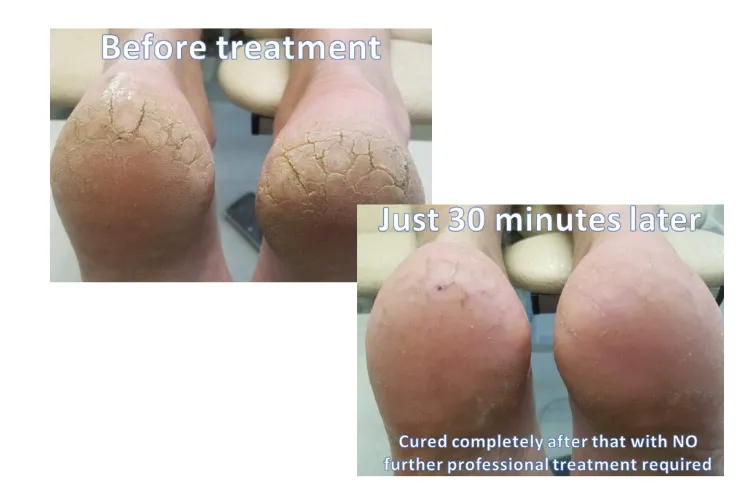
Professional Treatment: If your cracked heels have progressed beyond what can be managed at home, professional treatment is often necessary. Our podiatrists can safely remove the thickened skin using specialised tools like blades and drills. Although this might sound daunting, the procedure is painless and can bring significant relief.
Advanced Care for Severe Cracks: For deeper cracks that have reached the dermis (the layer of skin where nerves and blood vessels are located), we may use medical-grade glues to close the fissures, special dressings to protect the area, and heel sleeves to keep the skin moisturised and promote healing. In some cases, if the cracks are infected, appropriate treatment will be provided to ensure proper healing.
Symptoms of Cracked Heels
Cracked heels can vary in severity, and the symptoms you experience will depend on how advanced the condition is:
Dry, Thickened Skin: Your heels may appear dry, thickened, and often yellow or brown. This is usually the first sign that cracks might develop.
Visible Cracks: Small or large cracks, known as fissures, may form in the thickened skin. These can start off as shallow and painless but can deepen over time.
Pain and Bleeding: When the cracks extend into the deeper layers of skin, they can cause pain, bleeding, and an increased risk of infection, particularly if you have an underlying health condition.
Preventing Cracked Heels
Preventing cracked heels is often easier than treating them, especially if you’re prone to dry skin or have conditions that increase your risk. Here’s how you can keep your heels in good condition:
Physical Examination: Our podiatrists will assess the affected joints for signs of swelling, tenderness, and reduced range of motion. We will also evaluate your gait and posture to identify any compensatory movements that may be contributing to your symptoms.
Wear Supportive Footwear: Choose shoes that provide good support and cushioning for your heels. Avoid wearing open-backed shoes for long periods, as they can contribute to dryness and increased pressure on the heels.
Practice Good Foot Hygiene: Wash your feet daily with warm water and mild soap, making sure to dry them thoroughly, especially between the toes. Regular exfoliation can also help prevent the build-up of hard, thick skin.
Stay Hydrated: Drinking plenty of water can help maintain the moisture balance in your skin, reducing the likelihood of dryness and cracking.
Routine Check-Ups: If you have diabetes or other health conditions that affect your feet, regular check-ups with our podiatrists are essential. We can monitor your foot health and address any issues before they become more serious.
REVIEWS
Rated the best podiatrists in Southam — here’s what our patients are saying!
With years of training and experience, we combine our expertise with state-of-the-art equipment to provide the best possible care for all foot and lower limb conditions.
Our highly skilled podiatrists — previously based in London — now proudly serve the Southam community. See why our patients consider us the leading podiatrists in the area by reading their reviews.
Foot Health for the Whole Family at Health First Southam Foot & Gait Clinic
Are your feet being properly looked after? Foot pain, heel pain, even knee pain and back pain can be improved through biomechanical intervention, surgery or other treatments.
In an average lifetime our feet carry us the equivalent of five times around the world. It's not surprising that they need some first aid from time to time. You only get one pair so look after your feet!
Disclaimer
The contents of this website including any details given about conditions and treatments are for information purposes only and must not be used as a guide for self-diagnosis or self-treatment. Health First and Feet First (Southam) Limited do not accept any responsibility if the information held on these pages is used in any other way except for personal enquiry.

Contact Us
Feet First (Southam) Limited
Daventry Street
Southam
Warwickshire
CV47 1PH
Phone: 01926 811272
Email: [email protected]
Company Number: 04642090
Quick Links
Buy Foot Care Products

© 2022 Health First Foot and Gait Clinic | Warwickshire, CV47 1PH
We run on